ADVERTISEMENTS
Have you ever stopped to think about how much personal information you share while playing that addictive game on your phone? Well, we often don't even realize it, but mobile games collect an impressive amount of user data.
And look, it's no exaggeration to say that privacy and security in mobile games have become as important as the gameplay itself. After all, nobody wants their data leaked or their account hacked, right?
ADVERTISEMENTS
In this complete guide, I'll show you everything you need to know to play with peace of mind, protect your information, and avoid headaches. Let's go?
Why is privacy in mobile games so important?
The mobile gaming industry generates billions of dollars annually, and a portion of that profit comes precisely from the collection and use of player data. I'm not saying that's necessarily a bad thing, but you need to be aware of what happens behind the scenes.
ADVERTISEMENTS
When you download a "free" game, it needs to make money somehow. And often this happens through personalized ads, which rely on your data to function. The problem starts when this data collection goes beyond what is reasonable.
Your personal data is worth its weight in gold. In the digital marketplace, name, age, location, shopping habits, screen time – all of this is valuable to advertising and marketing companies.
What data do mobile games collect?
Get ready because the list is longer than you think. Mobile games can collect various types of information, and this isn't always clear to the user.
Basic Identification Information
Name, email, date of birth, profile picture – these are the most obvious pieces of information you provide when creating an account. Many games also ask for access to your social media accounts to facilitate login.
The problem is that by connecting your social media accounts, you may be giving access to far more information than you realize. Your friends list, photos, public posts – everything can be accessed depending on the permissions you grant.
Location Data
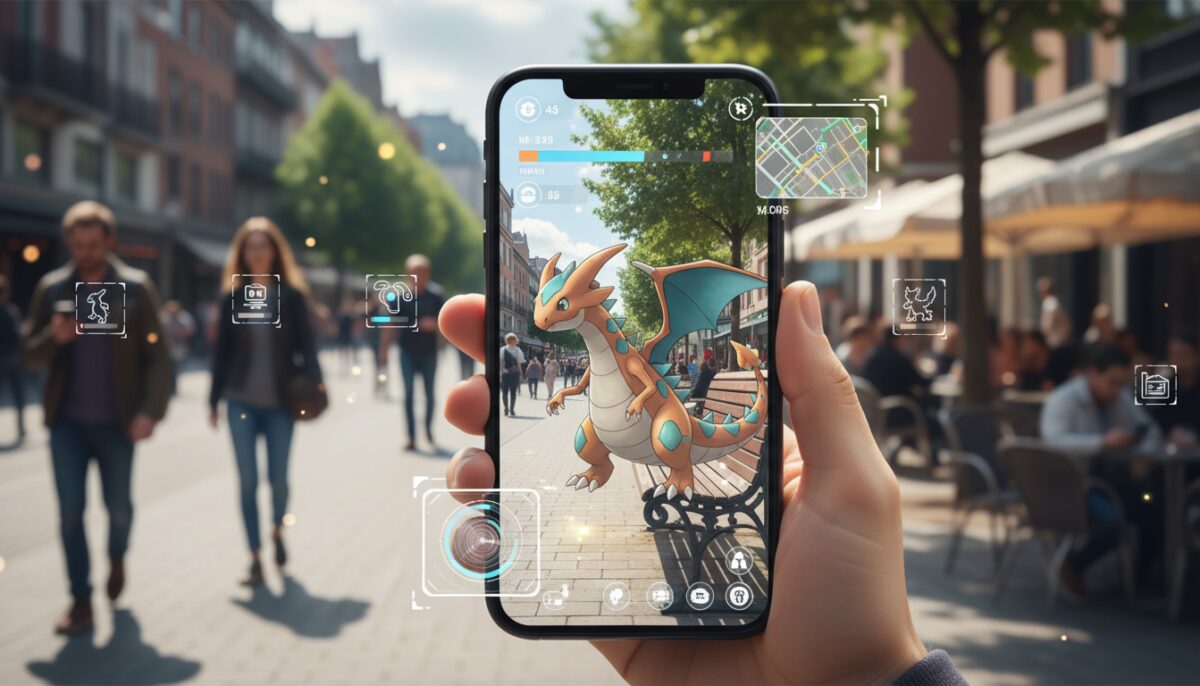
Games like Pokémon GO and other location-based games need to know where you are to function. But many other games also request access to your location unnecessarily.
Your location can reveal where you live, work, study, and frequent. This is highly sensitive information that deserves special attention when granting permissions.
Device Information
Mobile phone model, operating system, IP address, advertising identifier – this technical data is collected by virtually all games. It helps optimize the game and personalize ads.
- Unique device ID (IMEI, Android ID)
- Information about hardware and software.
- Network and carrier data
- Language and time zone settings
- Available storage space
Game Behavior
Developers love to know how you play. How much time you spend in the game, which levels you complete, where you get stuck, what you buy – everything is monitored and analyzed.
This data helps improve the game, but it's also used to encourage you to spend more money. The famous monetization mechanics They are adjusted based on your behavior.
The Main Security Risks
Now that you know what data is collected, let's talk about the real risks you run when playing on your mobile phone without taking the necessary precautions.
Data Leak
Large gaming companies have already suffered massive data breaches. Millions of accounts with emails, passwords, and personal information exposed on the internet. And it's not just small businesses that suffer from this.
When this happens, your data can be sold on the dark web or used for scams and fraud. That's why it's so important to use [protection/safety]. strong and unique passwords for each game.
Account Theft
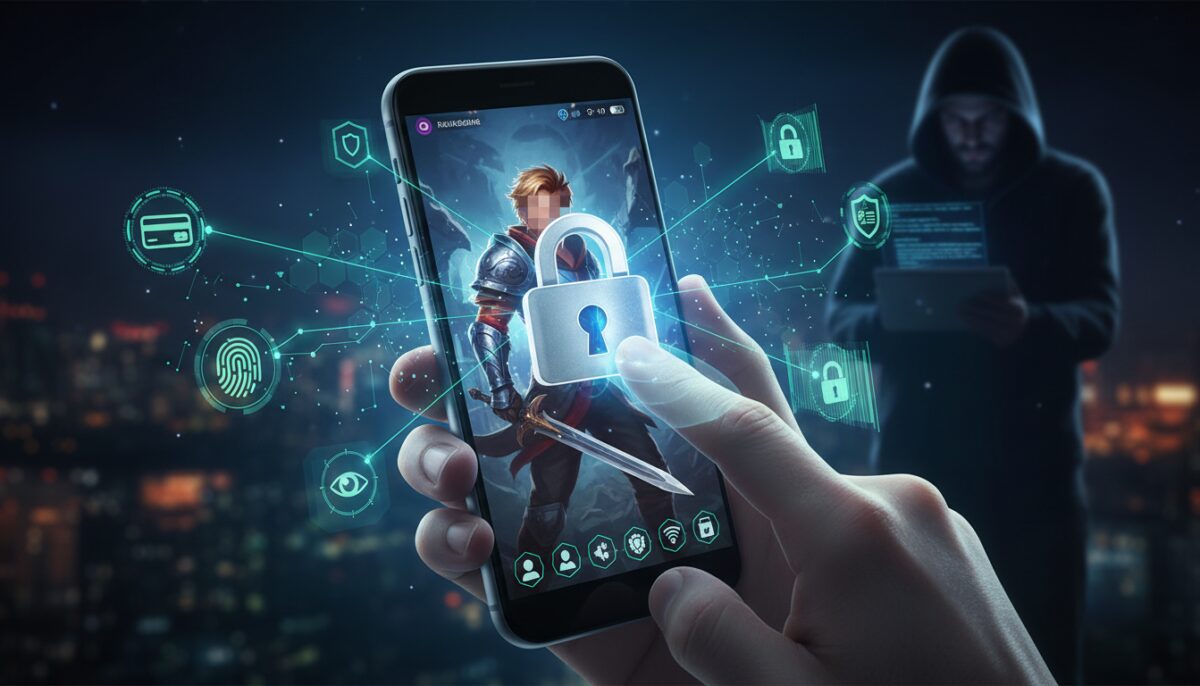
Imagine losing that account you invested time and money in? It's incredibly frustrating, and it happens more often than you think. Hackers use various techniques to steal game accounts.
Phishing, social engineering, malware – there are many forms of attack. And a popular gaming account can be worth hundreds or even thousands of reais on the black market.
Malware and Viruses
Downloading games from unofficial sources is extremely dangerous. Modified or hacked versions may contain viruses that steal your information, spy on your activities, or even hijack your device.
Even in official app stores, malicious games have been found that have passed through verification. Therefore, it's important to check reviews and the developer's reputation before downloading.
Unauthorized Purchases
Children making purchases without permission, saved payment methods being exploited, duplicate charges – problems with transactions in mobile games are common.
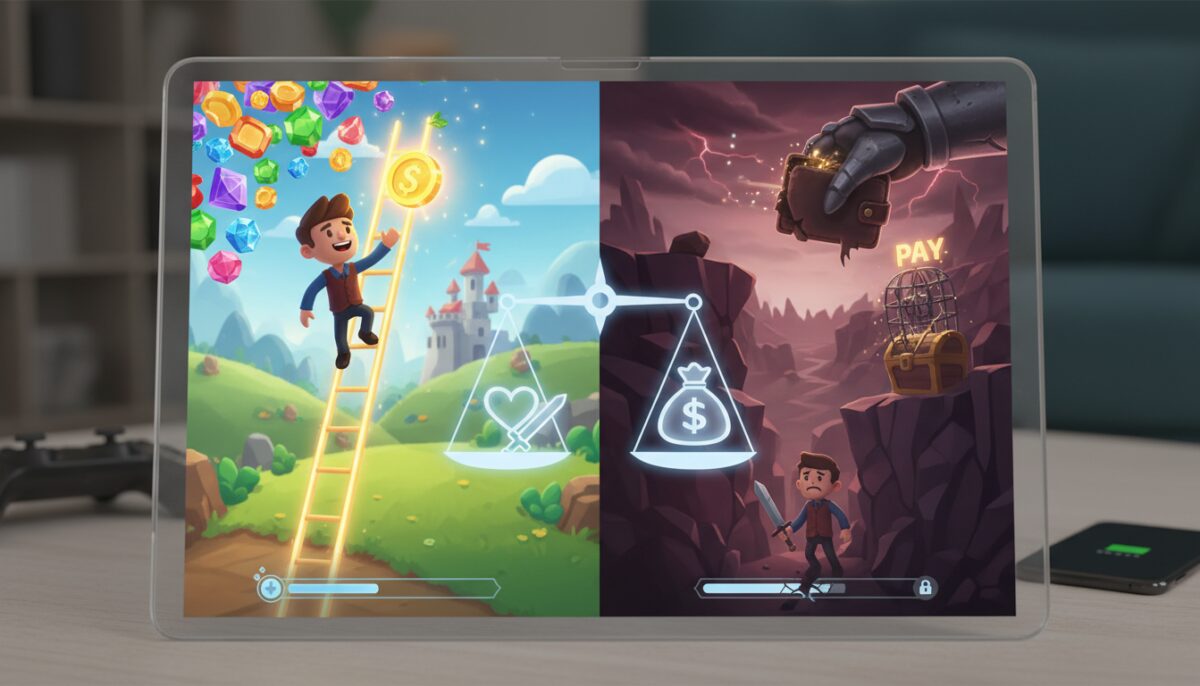
Many games use dark patterns – Design tricks that trick you into spending money without realizing it. Oversized purchase buttons, confusing confirmations, urgent offers – all designed to make you click without thinking.
How to Protect Your Privacy
Now comes the good part: what you can do to protect yourself. By following these tips, you drastically reduce the risk of having privacy and security problems.
Read the Privacy Policy.
I know, I know – nobody likes reading those huge texts full of legalese. But at least take a quick look at the main points before accepting everything.
Try to understand what data is collected, how it's used, and if it's shared with third parties. If something seems too invasive or unnecessary, think twice before installing the game.
Manage App Permissions
Both Android and iOS allow you to control which permissions each app has. A puzzle game doesn't need access to your camera, microphone, or contact list, right?
Go to your phone's settings and review your game permissions. Disable anything that isn't essential for functionality. Most games work perfectly without access to sensitive data.
Use Two-Factor Authentication
Whenever available, activate the two-factor authentication (2FA). This adds an extra layer of security to your account, requiring an additional code on top of your password to log in.
Even if someone discovers your password, they won't be able to access your account without two-factor authentication. It's a simple but very effective protection.
Create Strong and Unique Passwords
Never use the same password for all games and services. If one website leaks your data, all your accounts become vulnerable. Use a password manager to create and store complex and unique passwords.
A good password has at least 12 characters, mixing uppercase and lowercase letters, numbers, and symbols. And avoid using obvious information like birthdates or pet names.
Safety Tips for Children's Games
If you have children who play games on their cell phones, you need to be extra vigilant. Children are more vulnerable to scams, share information without thinking about the consequences, and may make accidental purchases.
Configure the parental control on their device. Both Google Play and the App Store offer features to limit downloads, purchases, and access to inappropriate content.
Talk to your children about the risks online. Teach them not to share personal information, not to accept friend requests from strangers, and to always ask permission before downloading anything new.
Disable In-App Purchases
To avoid surprises on your bill, completely disable in-app purchases or configure the app to always require a password. Many children have already unintentionally spent fortunes on mobile games.
Some games are specifically designed to encourage impulsive spending. Keep an eye on what your children are playing and explain the real value of virtual money.
Advantages of Games That Respect Privacy
- Greater peace of mind while playing without worrying about leaks.
- Fewer intrusive and more personalized ads.
- A cleaner and more focused gaming experience.
- Protection against misuse of personal data
- Lower risk of identity theft.
- Transparency regarding the collection and use of information.
Disadvantages of Games with Invasive Policies
- Exposure of sensitive personal data
- Bombardment of personalized ads
- Sharing information with unknown third parties
- Greater vulnerability to data breaches
- Constant activity tracking
- Possible sale of data to marketing companies.
- Risk of detailed profiles being created about you.
Warning Signs You Should Watch Out For
Some signs indicate that a game may not be trustworthy in terms of privacy and security. Watch out for these red flags before installing or continuing to play.
If a game asks for permissions that don't make sense for its functionality, be suspicious. A card game doesn't need access to your camera or location, for example.
Unknown or disreputable developers are another red flag. Research the company before installing, check user reviews, and look for privacy complaints.
Vague or nonexistent privacy policies are a very bad sign. Reputable companies make it clear how they handle your data. If there's no transparency, it's best to look for another option.
The Role of App Stores
Google Play and the App Store have improved their privacy policies in recent years. It's now easier to see what data an app collects even before downloading it.
Apple implemented the privacy labels, These systems function as a "nutritional information table" for the collected data. Google followed suit with a similar system. Use this information to make informed decisions.
Even so, don't blindly trust the app stores' verification process. There have been cases of malicious apps slipping through the screening process. Always do your own additional research.
Legislation and Your Rights
In Brazil, the General Data Protection Law (LGPD) It guarantees several rights to users. You can request that companies show you what data they have about you, correct it, or even delete it completely.
Companies operating in Brazil must comply with the LGPD (Brazilian General Data Protection Law), regardless of where they are headquartered. This includes large international mobile game developers.
If you feel your rights have been violated, you can file a complaint with the National Data Protection Authority (ANPD). Knowing your rights is the first step to exercising them.
Practical Tips for Everyday Life
Keep your operating system and apps up to date. Updates often include important security patches that protect against known vulnerabilities.
Use secure Wi-Fi networks when playing online. Avoid open public networks for logging into accounts or conducting transactions. If you must use one, consider using a VPN to encrypt your connection.
Uninstall games you no longer use. Besides freeing up space, you'll reduce the number of apps accessing your data. Clean your phone regularly.
Set up security notifications on your accounts. This way you'll be alerted immediately about suspicious logins or important account changes.
The Future of Privacy in Mobile Games
The trend is for regulations to become increasingly strict. Users are more aware of privacy, and this puts pressure on companies to change their practices.
New technologies such as blockchain and Web3 They promise to give players more control over their data and virtual items. It's still too early to say if this will materialize on a large scale.
The important thing is for you to stay informed and demanding. The more gamers worry about privacy, the more companies will need to adapt. Your behavior as a consumer makes a difference.
Playing games on your mobile phone is fun and convenient, but it doesn't have to mean sacrificing your privacy. With the right information and tools, you can enjoy your favorite games without putting your data at risk.
Remember: your data is valuable and you have the right to protect it. Don't be afraid to say no to unnecessary permissions or to delete games that don't respect your privacy. There are always better alternatives available.