ADVERTISEMENTS
Mobile games are no longer just the simple pastime we used to pass the time on the bus. The industry has evolved tremendously in recent years, and what's coming next promises to completely transform the way we play on our smartphones and tablets.
If you're one of those people who thinks you've seen it all in the world of mobile games, prepare to have your mind blown. The technologies that are coming will make current games look like child's play.
Let's dive deep into the technological trends shaping the future of mobile gaming and discover what awaits us in the coming years. Spoiler alert: it's much more exciting than you imagine!
5G and the Connectivity Revolution in Gaming
The arrival of 5G It's not just about faster internet speeds. We're talking about a complete paradigm shift in mobile gaming, especially when it comes to... latency.
With 5G, latency drops to such low levels that we can finally have truly competitive multiplayer experiences on mobile. That annoying delay that made you lose matches? A thing of the past.
But the real revolution lies in cloud gaming. Imagine playing full AAA titles on your smartphone without needing a top-of-the-line device. The processing happens in the cloud, and 5G ensures you receive everything in real time, without lag.
The Impact of 5G on Multiplayer Games
Mobile multiplayer games are about to reach a new level of quality. Matches with 100 simultaneous players, console-quality graphics, and zero lag will become the norm, not the exception.
Developers are already creating experiences specifically designed to take advantage of this new infrastructure. Massive open worlds, epic real-time battles, and live events with thousands of participants are on the horizon.
Artificial Intelligence: Smarter NPCs and Personalized Experiences
THE Artificial intelligence It's transforming mobile gaming in ways that were previously impossible. We're not just talking about smarter enemies, but experiences completely tailored to your play style.
Future NPCs will learn from your actions, adapt strategies, and create unique challenges for each player. Every game will be different because the game literally evolves with you.
Furthermore, AI is being used to create procedural content High quality. Missions, dialogues, maps, and even stories are automatically generated, but with the quality of handcrafted content.
Personalization Through Machine Learning
The games will analyze how you play and adjust the difficulty, rewards, and even the narrative in real time. If you prefer exploration, the game will offer more secrets to discover. If you enjoy action, get ready for more intense combat.
This personalization goes beyond gameplay. AI systems will suggest relevant purchases, events that match your style, and even friends to play with based on gameplay compatibility.
Augmented Reality: The Real World as Your Playground
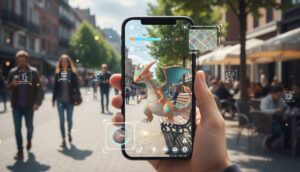
THE Augmented Reality (AR) It has already shown its potential with games like Pokémon GO, but what's coming next will make that seem like just the beginning of the journey.
With the evolution of smartphone sensors and technologies such To lead, AR games will be able to map the surrounding environment with incredible precision. Virtual creatures will interact convincingly with real objects.
Imagine epic battles unfolding in your living room, with monsters hiding behind the sofa or using the walls as cover. The level of immersion will be surreal.
- AR board games that transform any table into an interactive battlefield.
- Psychological horror experiences that use your own home as a setting.
- MMORPGs where you explore your real city in search of treasures and quests.
- Social games that connect players who are physically close to each other for collaborative adventures.
- Educational experiences that transform learning into interactive adventures.
AR Goggles and the Next Level of Immersion
Companies like Apple, Google, and Meta are developing AR glasses that will replace the need to hold a smartphone. This frees up your hands for more natural gestures and interactions.
With these devices, mobile games will completely merge with the real world. You'll be able to play while walking, working, or interacting with other people, all in a natural and integrated way.
Next-Generation Graphics on Mobile Devices
Mobile chipsets are evolving at an absurd speed. Processors like the Snapdragon 8th Gen and Apple Silicon chips already deliver performance comparable to previous generation consoles.
Technologies such as real-time ray tracing They're already arriving on smartphones. This means realistic reflections, dynamic lighting, and shadows that truly make sense within the game environment.
THE refresh rate Screen speeds are also increasing. 120Hz, 144Hz, and even 165Hz displays are becoming commonplace, offering fluidity that rivals PC gaming monitors.
Advantages of Advanced Graphics
- Superior immersion: More realistic worlds that will hold your attention for hours.
- Competitiveness: High frame rates provide an advantage in competitive games.
- Cinematic experiences: Visual narratives that rival films.
- Impressive details: Textures and models that previously only existed on powerful PCs.
Disadvantages to Consider
- Battery consumption: Advanced graphics drain energy quickly.
- Heating: Intense processing can cause the device to overheat.
- Cost of devices: Smartphones capable of running these games are expensive.
- File sizes: Games with cutting-edge graphics take up a lot of space.
Haptic Controls and Sensory Feedback
Technology haptics It's evolving beyond simple vibrations. Modern smartphones can now simulate textures, resistance, and even different types of impact through sophisticated haptic feedback.
Imagine feeling the difference between stepping on grass, sand, or asphalt in a racing game. Or perceiving the recoil of different weapons in a shooter through unique vibration patterns.
Some companies are developing haptic accessories that go beyond the smartphone, creating even more immersive tactile experiences. Gloves, vests, and even chairs that transmit sensations from the game to the real world.
Blockchain, NFTs, and the Decentralized Gaming Economy
However controversial the subject may be, technology blockchain It's making a significant impact on mobile gaming. And no, we're not just talking about expensive and pointless NFTs.
The real revolution lies in Real ownership of digital items. Imagine being able to sell that rare skin you got in one game and use the money in a completely different one, or even withdraw it to your bank account.
Play-to-earn games are creating economies where players can actually earn money playing, especially in developing countries where this can make a real difference in people's lives.
The Upside of Decentralization
When implemented correctly, blockchain technology can give players real control over their progress and achievements. Their items don't disappear if the game server shuts down, because they exist on the blockchain.
Furthermore, decentralized governance systems allow the community to vote on game changes, creating experiences that are truly shaped by the players.
Cross-Platform and Continuity Between Devices
The future of mobile gaming is not isolated. The trend is towards greater integration with other platforms, allowing you to start playing on your phone and continue on your PC or console without losing progress.
Services such as Xbox Cloud Gaming and GeForce NOW They already allow you to play AAA titles on your smartphone with your progress synchronized. This trend is only going to grow.
Imagine playing a complex RPG on your PC, leaving home, and continuing to do side quests on your phone during your commute, all in a fluid and natural way.
Streaming and Games as a Service
The model of signature Gaming is dominating the entertainment industry, and mobile games are no exception. Services like Apple Arcade and Google Play Pass are just the beginning.
The future points to massive libraries of games accessible through a monthly subscription, eliminating the need to purchase individual titles. This democratizes access to high-quality premium games.
Furthermore, the Gameplay streaming Integrated gameplay is becoming the standard. Sharing your gameplay, watching other players, and even playing together via streaming will be as natural as taking a screenshot today.
Spatial Audio Technology and Sound Immersion
THE spatial audio It's revolutionizing immersion in mobile games. With compatible headphones, you can pinpoint exactly where each sound is coming from in the game's 3D environment.
This is not just a legal perk, but a real competitive advantage in games like battle royales, where hearing footsteps in the right direction can mean victory or defeat.
Technologies such as Dolby Atmos and Apple Spatial Audio They are bringing cinematic sound experiences to the palm of your hand, creating three-dimensional sound environments that respond to your head movements.
Batteries and Energy Efficiency
One of the biggest challenges for mobile games has always been... battery life. But emerging technologies promise to drastically change this scenario.
Batteries graphene And other next-generation technologies can multiply the battery life of devices, allowing for much longer gaming sessions without needing to be plugged in.
Furthermore, processors are becoming increasingly efficient, delivering more performance while consuming less energy. The ARM architecture continues to evolve to intelligently balance power and consumption.
Next-Generation Controllers and Accessories
Although touchscreens have dominated mobile gaming, there is a resurgence of... physical controls. But we're not talking about ordinary controls.
Modular controllers that attach to smartphones, ultrasonic triggers integrated into screens, and even rings and gloves that capture finger movements are coming to market.
These accessories promise to combine the portability of mobile devices with the precision of traditional controllers, offering the best of both worlds for the most demanding gamers.
Security and Privacy in Mobile Games
With games collecting more and more data, the privacy This is becoming a growing concern. The future points towards more transparent systems and greater user control over their information.
Technologies of biometric authentication Advanced security measures will protect accounts and transactions, while encryption systems ensure your game data remains secure.
Furthermore, AI-based moderation tools will combat toxicity, cheating, and abusive behavior more efficiently, creating healthier environments for everyone.
The future is closer than you think.
All of these technologies are not far-fetched science fiction. Many are already in advanced stages of development or beginning to appear in early games and devices.
The next few years will completely transform the way we think about mobile gaming. The line between mobile, console, and PC will become increasingly blurred, until it practically disappears.
What's most exciting is that these technologies will not only improve the games we already know, but will allow for completely new experiences that we can't even fully imagine yet.
If you already think mobile games are amazing today, get ready. The future that's coming will completely redefine what it means to play on your phone. And honestly? I can't wait to see where this journey takes us!