
ADVERTISEMENTS
You know that feeling when a game is constantly pushing you to spend money? Or when it seems impossible to progress without opening your wallet? Well, you're not imagining things. Many mobile games are designed to be intentionally frustrating, while others manage to balance fun and monetization fairly.
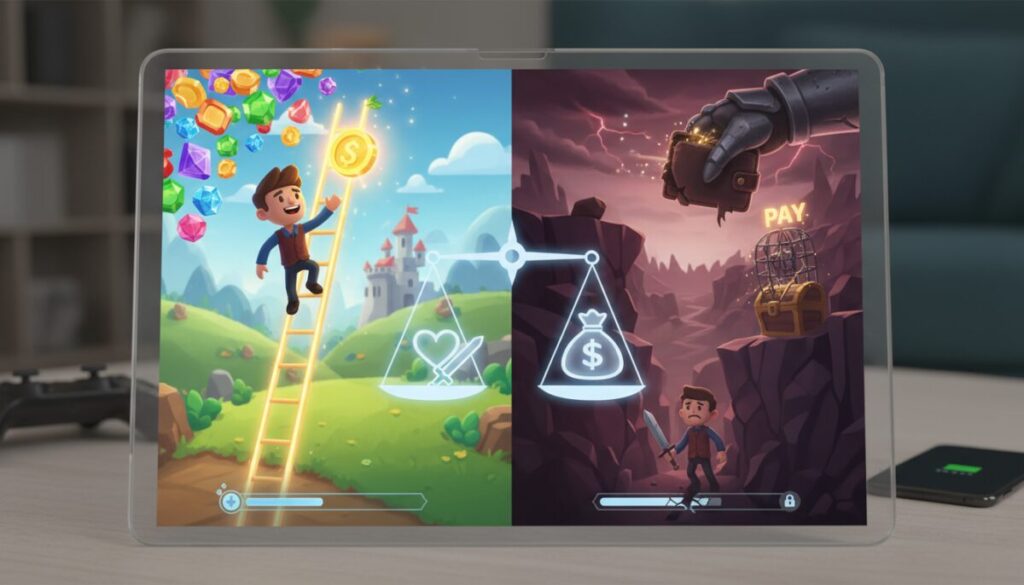
Understanding the difference between fair play and punitive play can save you time, your sanity, and most importantly, your wallet. Let's delve deep into the signs that reveal the developers' true intentions.
What Defines a Fair Game?
A fair mobile game respects your time and offers consistent progression even for players who don't spend money. It gives you real choices about how to play and doesn't create artificial barriers just to force purchases.
THE transparency This is crucial. Fair play clearly outlines the odds of obtaining rare items, how long it takes to unlock content, and what real benefits purchases offer.
Furthermore, they allow you to have fun without feeling like you're constantly being pressured to spend money. Fun comes first; monetization is an option, not an obligation.
Warning Signs: When the Game Is Punitive
Energy that runs out too quickly.
If you can only play for 5 or 10 minutes before running out of energy, that's a huge red flag. Punitive games drastically limit free playtime to force you to buy energy refills.
A fair game offers reasonable gaming sessions – at least 20 to 30 minutes – before you need to wait. Some even offer alternative modes that don't consume energy.
Impossible Progression Walls
You were making good progress and suddenly you hit an insurmountable wall? That's punitive design. The game lets you progress at the beginning to get you hooked, then creates absurd obstacles.
These obstacles usually appear when you've already invested enough time to feel committed to the game. It's a psychological tactic known as... sunk cost.
Loot Boxes and Predatory Gacha
Random reward systems aren't necessarily bad, but be wary when the chances of getting something useful are minuscule. If you need to spend hundreds of dollars for a decent chance of getting competitive characters or items, run away.
Fair games offer pity systems (Guarantee systems) that ensure that after a certain number of attempts you will receive something good. They also show the actual drop rates.
How to Analyze the Economics of Gaming
The internal economy of a mobile game reveals a lot about its intentions. Observe how resources are distributed and how long it takes to obtain premium currency for free.
Try this simple test: play for a week without spending any money. Note how much premium currency you earned for free and compare it to the prices of items in the store. If the ratio is absurd, you're facing a punishing game.
Fair play allows free-to-play players to accumulate premium currency through... Daily login, achievements, and events. It may take longer, but it's possible to get premium items without paying.
Resource Inflation
Pay attention if item prices increase exponentially while your ability to earn resources grows linearly. This creates a gap that can only be filled with real money.
In fair games, your ability to earn resources scales proportionally with the challenges and costs. You feel like you're truly progressing, not running on an endless treadmill.
Checklist for Identifying Punitive Games
- Energy system that depletes in less than 15 minutes of gameplay.
- Multiple premium currencies that are confusing and difficult to track.
- "Limited" offers that constantly appear, creating a false sense of urgency.
- PvP where paying players have overwhelming and permanent advantages.
- Events that require continuous gameplay for hours or cost to complete.
- Lack of clear information regarding drop rates and probabilities.
- Frequent updates that make your previous progress obsolete.
- Inability to compete in rankings without spending money.
- Excessively long timers for builds and upgrades.
- Lack of meaningful single-player content.
Pay-to-Win vs Pay-to-Progress
There is a crucial difference between these two models. Games pay-to-win They sell direct power – you pay and become stronger than free players, with no possibility of being overtaken.
As for the games pay-to-progress They sell convenience and speed. Paying players progress faster, but free players can eventually reach the same point with dedication.
A fair game adopts a pay-to-progress model or sells only cosmetic items. Punitive games are clearly pay-to-win, creating an insurmountable divide between those who pay and those who don't.
The Skill Test
Ask yourself: does skill matter in this game? If an average player with expensive characters always beats a skilled player with free characters, you have a problem.
Fair games reward strategy, timing and game knowledge. Money can help, but it doesn't completely replace a player's skill.
Analyzing Reviews and Community
App store reviews tell revealing stories. Don't just look at the overall rating; read recent negative reviews. They often highlight changes that have made the game more punishing.
Look for patterns in the complaints. If dozens of people mention the same problems – such as progress barriers, impossible events, or changes that encourage spending – take it seriously.
Visit communities on Reddit, Discord, or forums dedicated to the game. Veteran players are usually brutally honest about the direction the game is taking and whether it's worth investing time in.
Pay attention to the developers' responses.
How do developers respond to criticism? Do they listen to community feedback and make adjustments, or do they simply ignore legitimate complaints about predatory practices?
Fair game developers maintain transparent communication, They explain their design decisions and demonstrate a willingness to balance monetization with player experience.
Advantages of Fair Play
- You can have fun without spending anything or by spending modest amounts.
- Consistent progression that rewards dedication and skill.
- A healthier and less toxic community
- Greater game longevity because players don't quit in frustration.
- A real sense of accomplishment when you reach your goals.
- Transparency in mechanics and reward systems
- Balance between paying and free players in competitive modes.
Disadvantages of Punitive Games
- Constant frustration and a feeling of being manipulated.
- The need to spend absurd amounts of money to be competitive.
- Time invested may become irrelevant after updates.
- The community is often toxic and divided between "whales" and free-to-play players.
- Risk of developing compulsive spending habits
- Secondary gameplay in relation to monetization.
- High probability of abandoning the game after investing time and money.
The Role of Events and Updates
Events can reveal a lot about the nature of a game. Fair events offer attainable rewards for different skill levels, with tiered objectives that everyone can enjoy.
Punitive events set impossible goals for free-to-play players, forcing them to spend money to complete missions or obtain significant rewards. They create FOMO (fear of losing) artificial.
Also pay attention to the frequency of events. If there are constantly overlapping events, all demanding attention and resources, this is designed to drain your resources and push you towards purchases.
Power Creep and Planned Obsolescence
Punitive games often introduce increasingly powerful characters or items, rendering your previous investment obsolete. This forces continuous spending just to remain relevant.
Fair games balance new content without completely invalidating what came before. They offer upgrade paths for older characters or to maintain their viability through rebalancing systems.
Testing on My Own
The best way to evaluate a game is to experience it critically. Play for at least two weeks before investing money. This gives you time to see beyond the initial "honeymoon" period.
During this period, write down your impressions daily. Are you making progress? Having fun? Feeling pressure to spend money? Your answers will become clear over time.
Compare your experience with that of veteran players. If they report that the game gets drastically worse after a certain point, you'll know what to expect and can decide whether it's worth continuing.
When is it worth spending?
Spending money on mobile games isn't wrong, as long as it's a conscious choice and not an imposed necessity. If you're genuinely having fun and want to support the developers, go ahead.
Search for real value packages Those that offer significant benefits at reasonable prices. Avoid impulse purchases during limited-time events designed to pressure you.
Establish a monthly budget and never exceed it. If you find yourself spending more than planned or feeling the need to spend money for entertainment, it's time to reassess your relationship with gambling.
Conclusion: Protecting Your Time and Money
Identifying whether a mobile game is fair or punitive requires attention to detail and a willingness to be honest with yourself. The signs are all there – from abusive energy systems to impossible events and blocked progression.
Remember that your time and money are valuable. There's nothing wrong with abandoning a game that doesn't respect that, no matter how much you've already invested. The mobile gaming market is full of better options.
Use the tools and knowledge in this guide to make informed choices. Play games that bring you genuine joy, not frustration disguised as a challenge. You deserve experiences that value your presence, not just your wallet.