ADVERTISEMENTS
If you've ever spent hours playing games on your phone, you've surely felt that urge to level up, unlock that cool skin, or complete another mission. That's no coincidence! The progression systems in mobile games are carefully designed to keep you engaged and always coming back for more.
These systems are the backbone of virtually all modern mobile games. They function as a set of mechanics that reward your time and effort, creating a constant sense of progress and accomplishment.
In this article, we'll delve deep into how these systems work, why they're so addictive, and how developers use them to create memorable (and profitable) experiences.
What are progression systems?
In simple terms, progression systems These are mechanisms that allow the player to advance and evolve within a game. They can take many forms, from the classic leveling system to more complex systems of skills, equipment, and achievements.
The central idea is always the same: to give the player a tangible sense of progress, getting stronger and unlocking new possibilities. This progression creates a reward cycle that keeps interest alive.
Unlike traditional console or PC games, mobile games need to adapt these systems to shorter sessions and frequent interactions throughout the day. Therefore, progression needs to be constant and rewarding, even in small doses.
Main Types of Progression Systems
Level and Experience System
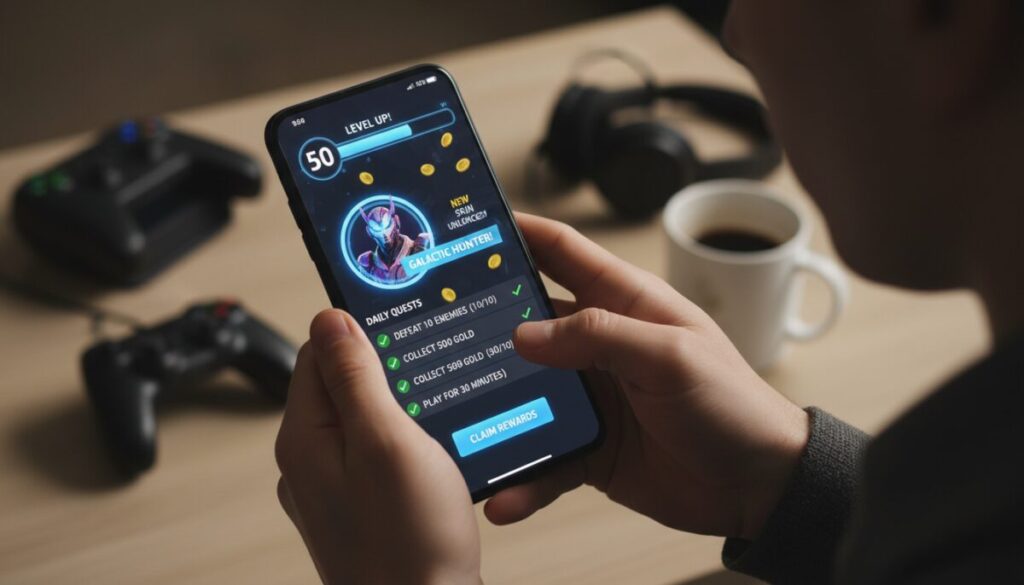
THE level system It's probably the most traditional and recognizable. You complete missions, defeat enemies, or perform specific actions to earn experience points (XP). When you accumulate enough XP, you level up.
Each new level usually brings rewards such as improved attributes, unlocked new skills, or access to exclusive content. Games like PUBG Mobile and Free Fire use this system for both the character and the player profile.
The beauty of this system lies in its simplicity and clarity. The player always knows exactly how far they are from the next important milestone, creating a clear and measurable goal.
Equipment and Upgrade System
Here, progression happens through collection and improvement of equipment. You find or buy better items, then upgrade them using resources collected in the game.
Mobile RPG games like Genshin Impact and Raid: Shadow Legends are masters of this type of system. You're constantly searching for more powerful weapons, armor, and accessories.
The interesting thing is that this system creates multiple layers of progression. It's not enough to just get a rare item – you can also spend it, evolve it, and customize it, multiplying the possibilities for growth.
Skills and Talents System
You skill systems They allow you to customize your play style by choosing which skills to develop. This adds a strategic layer to progression.
In games like Mobile Legends and League of Legends: Wild Rift, you choose which skills to prioritize during the match. In RPGs, however, there may be complex talent trees that define your character's build.
This type of system significantly increases replayability, as different choices create distinct experiences even with the same character.
Battle Pass and Season Passes
THE Battle Pass It has become extremely popular in recent years. It works like a rewards trail that you unlock by completing challenges and earning XP during a limited season.
There is usually a free version and a premium (paid) version. The premium version offers much more attractive rewards, encouraging players to invest money.
Fortnite popularized this model, and today virtually every competitive mobile game has its own Battle Pass. It's a brilliant way to keep players engaged for defined periods of time.
Mechanics That Enhance Progression
Daily and Weekly Missions
To the daily missions These are objectives that are renewed every day, encouraging you to open the game regularly. They can be simple things like "play 3 matches" or "defeat 20 enemies".
These missions typically offer modest but consistent rewards. The goal is to create a habit, turning the game into part of your daily routine.
The weekly missions work similarly, but with more challenging objectives and greater rewards. Together, they create multiple reasons for you to keep returning to the game.
Limited Events
You temporary events They add urgency to the progression. They offer exclusive rewards that can only be obtained during a specific period.
This creates a sense of scarcity and FOMO (fear of missing out). You don't want to miss out on that special skin or that exclusive character that will never be available again.
Games like Clash of Clans and Brawl Stars constantly launch seasonal events that keep the community active and engaged.
Achievement and Trophy System
To the achievements They function as long-term goals that reward specific activities. These can be things like "reach level 50" or "win 100 consecutive matches".
They add extra challenges for players seeking to completely master the game. Many players are collectors by nature and love completing 100% of the available achievements.
Furthermore, publicly visible achievements serve as status symbols within the game community.
The Psychology Behind Progression
Progression systems are so effective because they exploit fundamental psychological principles of human behavior. Understanding this helps to understand why they are so addictive.
The concept of variable reward It's crucial. When you don't know exactly what reward you're going to receive, but you know you'll get something, your brain releases dopamine. It's the same principle as slot machines.
THE Zeigarnik effect That also comes into play. Our brain remembers incomplete tasks better, creating mental tension that is only resolved when we complete the objective. That progress bar in 90% keeps nagging at you!
THE flow theory This explains why progression needs to be balanced. If it's too easy, it gets boring. If it's too difficult, it gets frustrating. Ideally, the challenge should be kept slightly above your current skill level.
Paid Progression vs. Free Progression
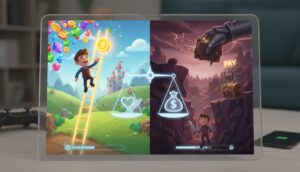
One of the most controversial aspects of modern mobile games is the distinction between paying and free players. Progression systems need to balance these two audiences.
Games pay-to-win They allow players to pay to progress faster or gain direct competitive advantages. This can create frustration among the free-to-play player base.
As for the games free-to-play Well-balanced games offer significant progression without payments, but monetize through cosmetic items, convenience, or optional speed boosts.
The ideal model allows free-to-play players to experience real progression, while paying players receive benefits that justify the investment without disrupting the competitive balance.
Advantages of Progression Systems
- Prolonged engagement: They keep players interested for months or even years.
- Sense of accomplishment: Each milestone achieved brings genuine satisfaction.
- Customization: They allow each player to develop their own unique style.
- Clear objectives: There's always something specific to work on.
- Active community: Players share progress and strategies.
- Replayability: Different progression paths encourage multiple playthroughs.
- Sustainable monetization: They allow developers to maintain the game for free.
Disadvantages and Criticisms
- It can create dependency: Highly effective systems can become manipulative.
- Excessive grinding: Some games require tedious repetition to progress.
- Pressure to spend: Artificial progression can force purchases.
- Competitive imbalance: Pay-to-win undermines the free experience.
- FOMO and anxiety: Limited events can create unnecessary stress.
- Artificial content: Progression can mask a lack of real content.
- Barrier for new players: Highly advanced veteran players intimidate beginners.
How Developers Balance Progression
Creating a balanced progression system is a delicate art. Developers need to consider various factors to keep both casual and hardcore players satisfied.
THE progression curve It's fundamental. In the beginning, you progress rapidly to feel powerful and understand the systems. Afterward, the progression gradually slows down, but never stops completely.
Many games implement systems of catch-up which helps new players catch up with veterans more quickly. This keeps the player base healthy and prevents newcomers from feeling hopelessly behind.
THE periodic reset This is also a common strategy. Seasons that reset rankings or introduce new goals level the playing field and renew interest.
The Future of Progression Systems
Progression systems continue to evolve with new technologies and trends. Artificial intelligence can personalize progression for each player individually, dynamically adjusting difficulty and rewards.
Integration with blockchain and NFTs This is being explored, allowing progress and items to truly be owned by the player and transferable between games.
Progression systems cross-platform These features are becoming standard, allowing you to continue your progress across mobile, PC, and console without interruption.
We also see a trend towards more progressions narratives, where its evolution is closely linked to the game's history, creating more immersive and meaningful experiences.
Tips for Making the Most of Your Progression
As a player, you can maximize your experience with progression systems by following some smart strategies.
First, set your own goals. Don't let the game completely dictate your pace. Decide what's important to you and focus on that.
Enjoy the free resources to the maximum. Many players ignore daily missions and events, missing out on significant progress at no cost.
Be strategic with your limited resources. Do your research before spending premium coins or rare materials on upgrades that may not be worth it.
Remember that progression should be fun, It's not an obligation. If you're playing just to complete daily missions without any enjoyment, perhaps it's time to reassess.
Final Considerations
Progression systems are the glue that holds mobile games together. They transform casual experiences into epic journeys of growth and achievement.
When implemented well, these systems create incredibly rewarding experiences that respect the player's time and investment. When poorly done, they can become manipulative traps focused solely on extracting money.
Understanding how these systems work not only improves your gaming experience, but also helps you make more informed choices about where to invest your time and money.
Ultimately, progression in mobile games is a reflection of our own human nature – the constant desire to grow, improve, and conquer new challenges. And there's nothing wrong with satisfying that desire, as long as it's done in a healthy and balanced way.